Eavesdropping through Speakers and Loudspeakers
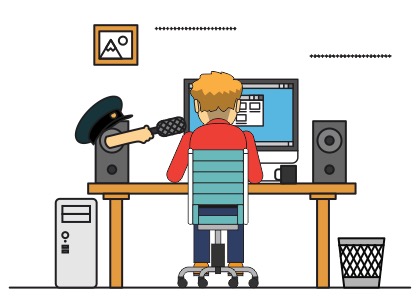
How a Speaker Becomes a Microphone
Many of you know that the core mechanism of both a microphone and headphones is signal conversion: in the case of headphones, an electrical signal is converted into an acoustic one, while a microphone, conversely, converts acoustic vibrations into an electrical signal.
I’ll start with the worst… Any of your speakers, loudspeakers, or headphones can be used as a microphone for eavesdropping on the perimeter of a room.
Of course, due to the lack of an amplifier, speakers will be inferior to microphones in the perimeter of the eavesdropped room. I have seen studies that mentioned a radius of 10 meters for eavesdropping through speakers, but I believe that realistically, eavesdropping can occur within three to five meters, in other words, a person working at the device.
You might be quite surprised, but if you take a moment and search the internet, you will find many instructions on how to turn a speaker into a microphone. Unfortunately, this can be done at the software level, which is even more concerning – it can be done remotely.
Today, there are many solutions to protect against unauthorized access to microphones, and we will definitely discuss them in a separate chapter, but there are no software protection methods if your speakers are used as a microphone.
Using Speakers to Transmit Information Beyond an Isolated System
Isolated systems are systems that are physically isolated from the external network. It is impossible to launch an attack on these systems from the internet, and specialists are constantly searching for new attack methods. Even if it is possible to infect it using a compromised flash drive, how can one establish data exchange with the compromised system?
One attack vector is to use the speakers of a compromised isolated machine to receive and transmit data. Researchers have managed to create data transmission through compromised speakers at a speed of 166 bits/s at a distance of up to 3 meters and up to 10 bits/s at a distance of up to 9 meters.
This work belongs to Israeli specialists from Ben-Gurion University in the Negev. Information is transmitted using ultrasonic waves that are inaudible to the human ear. This method has been named Mosquito by the researchers, and if your work involves protecting isolated systems, you should familiarize yourself with the original of their work at https://arxiv.org/pdf/1803.03422.pdf.