Throwing Digital Evidence
In the middle of summer 2017, the popular VPN service in Russia, HideMy.name, was blocked by the decision of the Medvedev District Court of Yoshkar-Ola. The reason was the presence on the site of a book written in 1924 in the prison of Landsberg by former corporal of Austrian descent Adolf Hitler.
This is a great example of a threat... no, not the throwing of digital evidence, but internet censorship. In the described case, the court found something on the site that was never there – this is more of a threat to common sense and has no direct relation to IT security. The VPN service allowed users to bypass government blocks, was popular among users, and there were no official reasons for restricting access to it.
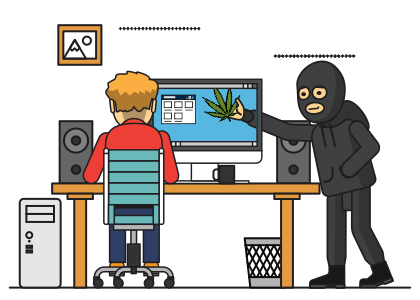
But sometimes it happens that law enforcement agencies, especially in developing countries, and criminals throw digital evidence, and they can throw it at anyone, even a high-ranking official.
There is no need to look far for an example: one day, the President of the Czech Republic, Miloš Zeman, while at his summer residence in the Lama Castle, discovered materials containing child pornography on his computer. Specialists investigating the incident found that the files had been uploaded by a hacker from an American IP address.
Another example, already from Russian realities. Konstantin, whose last name we cannot disclose at his request, worked as a journalist for a provincial newspaper. Due to one journalistic investigation, he had a conflict with the main character of the article and with the editor, who strongly advised against publishing the material. Konstantin received threats, one of which came true.
A colleague handed him password-protected archives with the investigation on a flash drive, just three files, and a password for them. Two files opened successfully and contained very interesting data, but the password did not work for the third one. The colleague said he would check later, maybe he got a bit confused with the passwords.
But the next day, Konstantin did not need the password anymore: at work, he was met by plainclothes officers, who presented their IDs, dryly informed him of suspicions of possessing child pornography, and asked to show his work laptop. Konstantin provided access, as he had no pornography, let alone child pornography.